
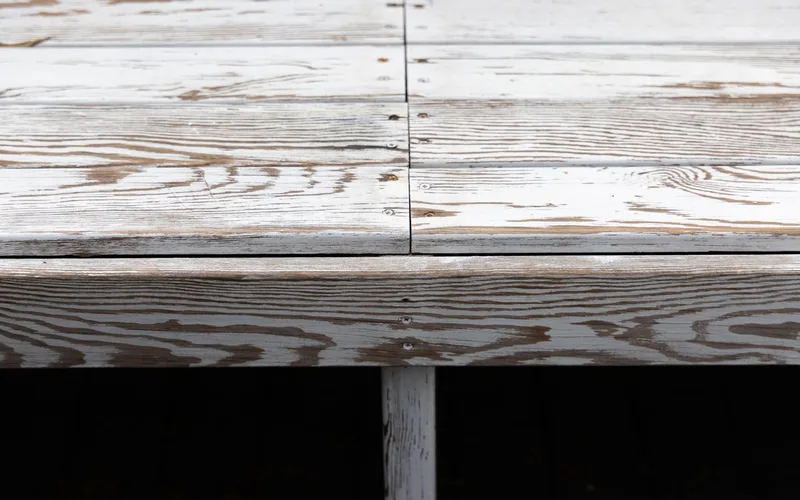
Consider resurfacing only when a qualified assessment supports keeping the structure and identifies what the new surface will rely on. If the supports or house connection can't be assessed yet, keep the scope conditional rather than committing to boards alone. If you suspect the deck is unsafe, stay off it; Chicago directs porch and deck concerns to 311.
Separate the surface from what carries it
The decking is what you walk on. The framing, supporting posts and footings, and any structural attachment to the house are separate parts of the assembly. The American Wood Council's deck guide illustrates those relationships for its residential wood-deck examples. New boards don't demonstrate that the retained supports or connections are suitable. A stain or rough finish alone doesn't tell you what is happening below, either. Ask the assessor to label each assembly suitable to retain, needs work, or not yet assessed, and to explain the evidence for that label.
Decide what to do with unresolved parts
Ask how a professional will evaluate the house-side connection and the supports that are not visible, and what that assessment could change. For a project that also changes the stairs or guard, specify whether it touches only a finish or changes the supporting pieces or attachments. DCA 6 describes a specific prescriptive design approach; it is not a way to certify the existing deck. If a proposal assumes the framing stays, put the stop and revised-scope procedure in writing before work begins.
Recheck the permit path if the scope changes
Chicago's permit rule turns on the work actually being done and whether that work is exempt. If an assessment moves the job from boards to joists, stringers or the supporting structure, confirm the license and permit path again rather than proceeding under the original description. The useful decision isn't whether the deck looks old; it's which parts can stay, which can't, and which still need professional evaluation.
Read next: compare four-season surfaces for the path up to the deck.